

Fertility App Onboarding – UX Audit & Experience Optimisation
Improving onboarding clarity, user confidence, and early product engagement in a sensitive, high-stakes user journey.
This project was completed as part of a hiring process for a SaaS product, focused on improving onboarding clarity and user experience through interface copy.
Overview
Onboarding is one of the most critical moments in a product experience. In a fertility-focused application, it carries additional weight. Users are often navigating uncertainty, complex information, and emotional sensitivity.
This project focused on auditing and improving an existing onboarding flow to reduce friction, increase clarity, and create a more supportive and intuitive user experience.
Completed as part of a product design assessment.

Problem
The existing onboarding experience was visually clean and approachable, but several usability and communication issues reduced its effectiveness:
- Key steps lacked clarity, requiring users to interpret what was being asked
- Copy was friendly but not always purposeful or benefit-driven
- Users were required to input complex or unfamiliar information without sufficient guidance
- The flow did not consistently reinforce progress, confidence, or next steps
This created unnecessary cognitive load at a stage where users need reassurance and direction.
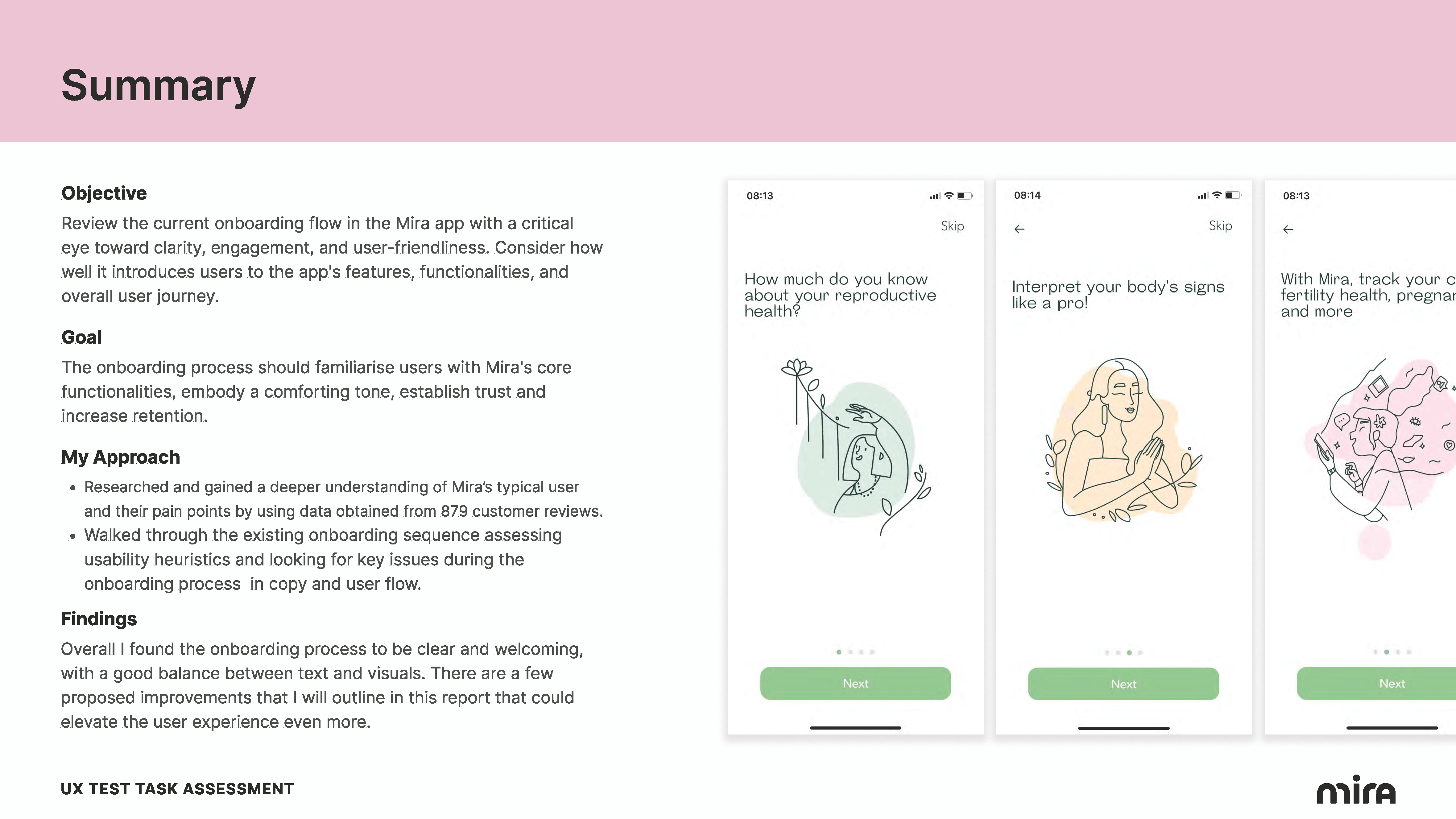
Objective
Redesign the onboarding experience to:
- Reduce cognitive load and ambiguity
- Improve clarity of instructions and inputs
- Build user trust through tone and guidance
- Create a more structured and supportive onboarding journey
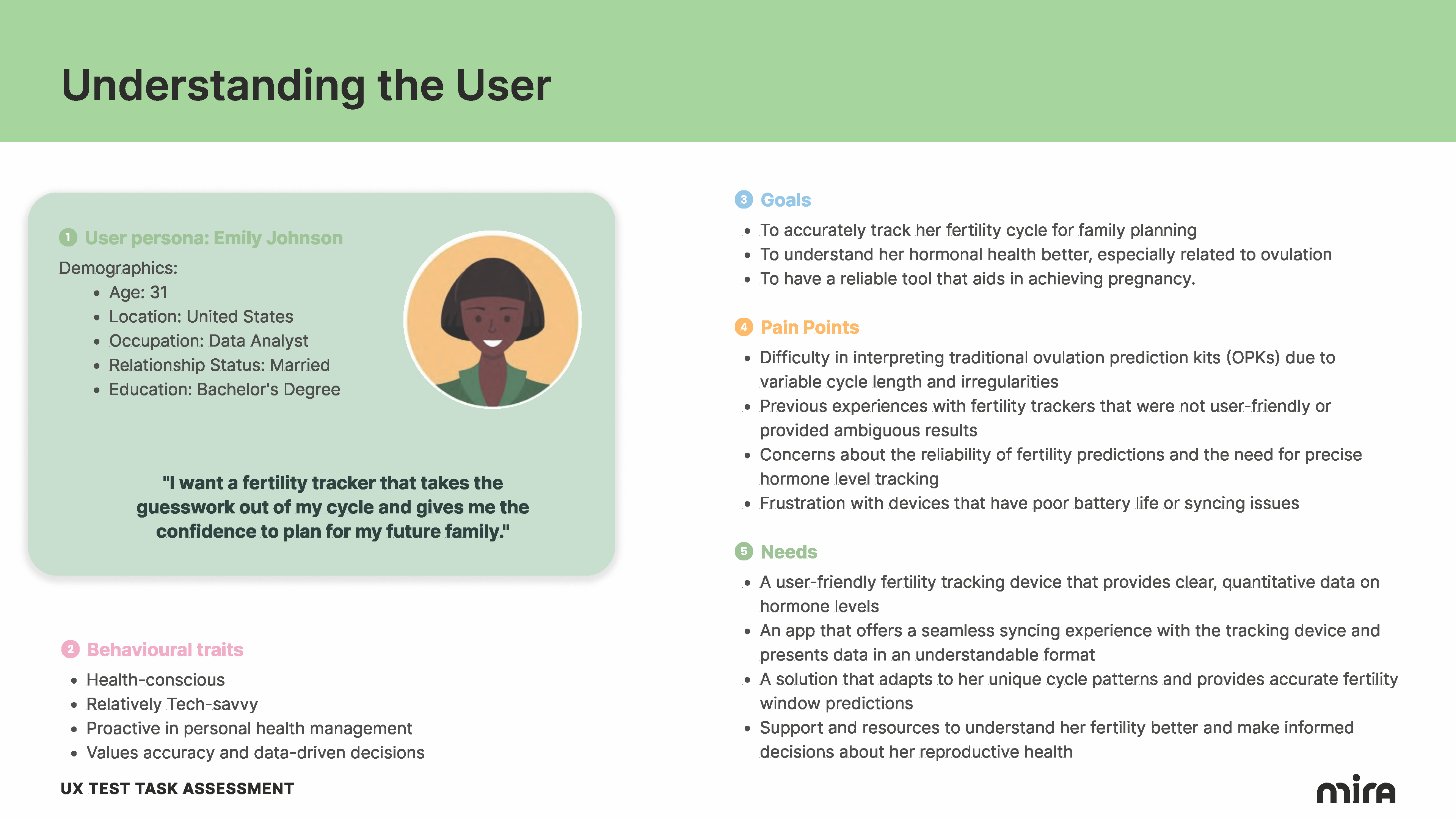
Approach
I approached onboarding as a connected product system, focusing on how users move through the experience rather than evaluating individual screens in isolation.
1. Research Under Constraint
As this project was completed without access to internal research, analytics, or stakeholders, I conducted a lightweight research synthesis using publicly available app store reviews and user feedback.
This allowed me to ground decisions in real user behaviour and identify recurring patterns in:
- User expectations when starting the app
- Frustrations during setup and data input
- Mental models around fertility tracking and interpretation
This approach reflects early-stage product environments, where designers often need to make informed decisions using limited but meaningful data sources.
2. UX Audit
I evaluated the onboarding flow using usability heuristics, focusing on:
- Clarity of instructions and inputs
- Cognitive load across each step
- Consistency of tone and communication
- Effectiveness of guidance and feedback
This helped identify friction points where users were likely to hesitate, misinterpret, or disengage.
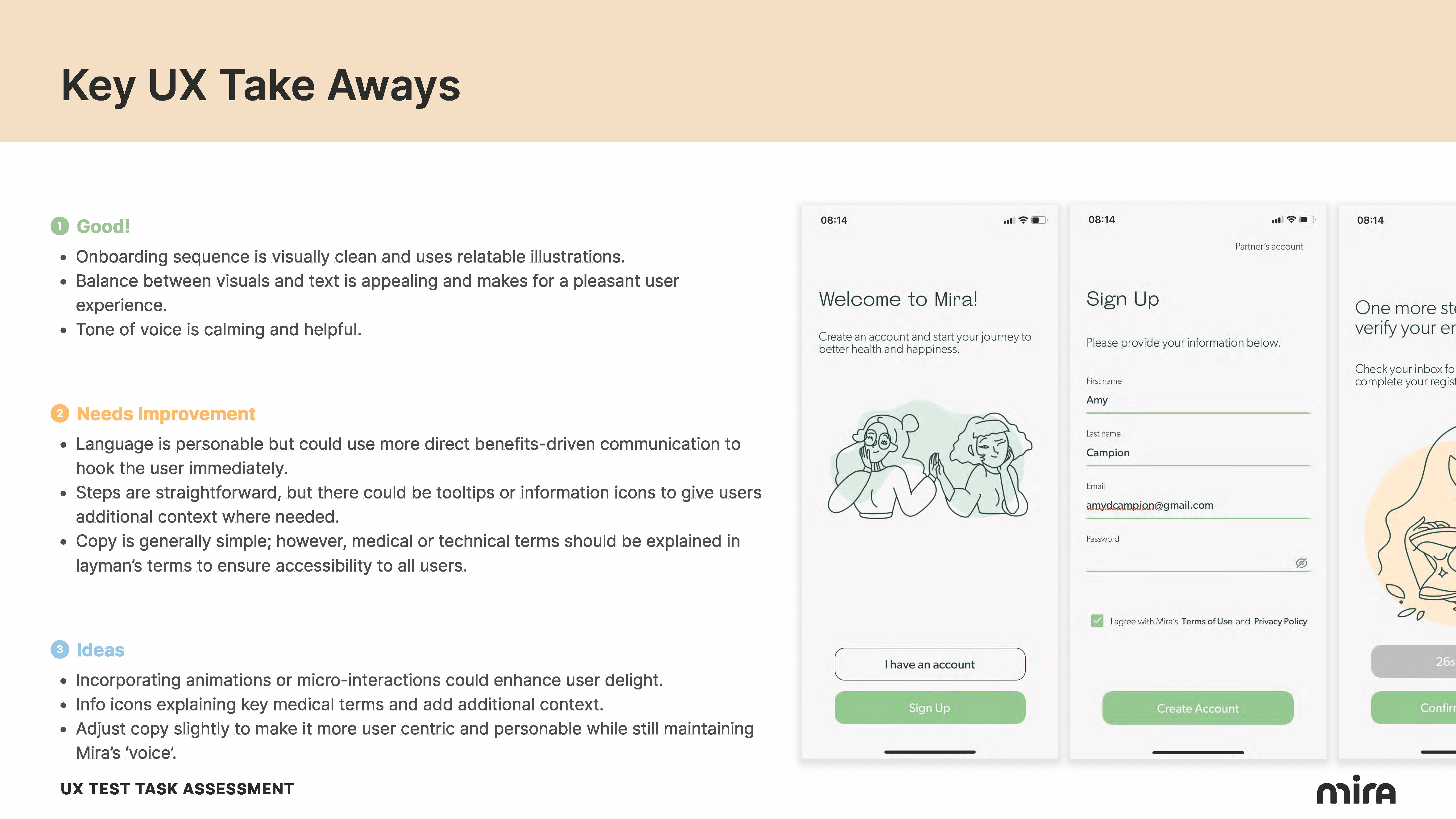
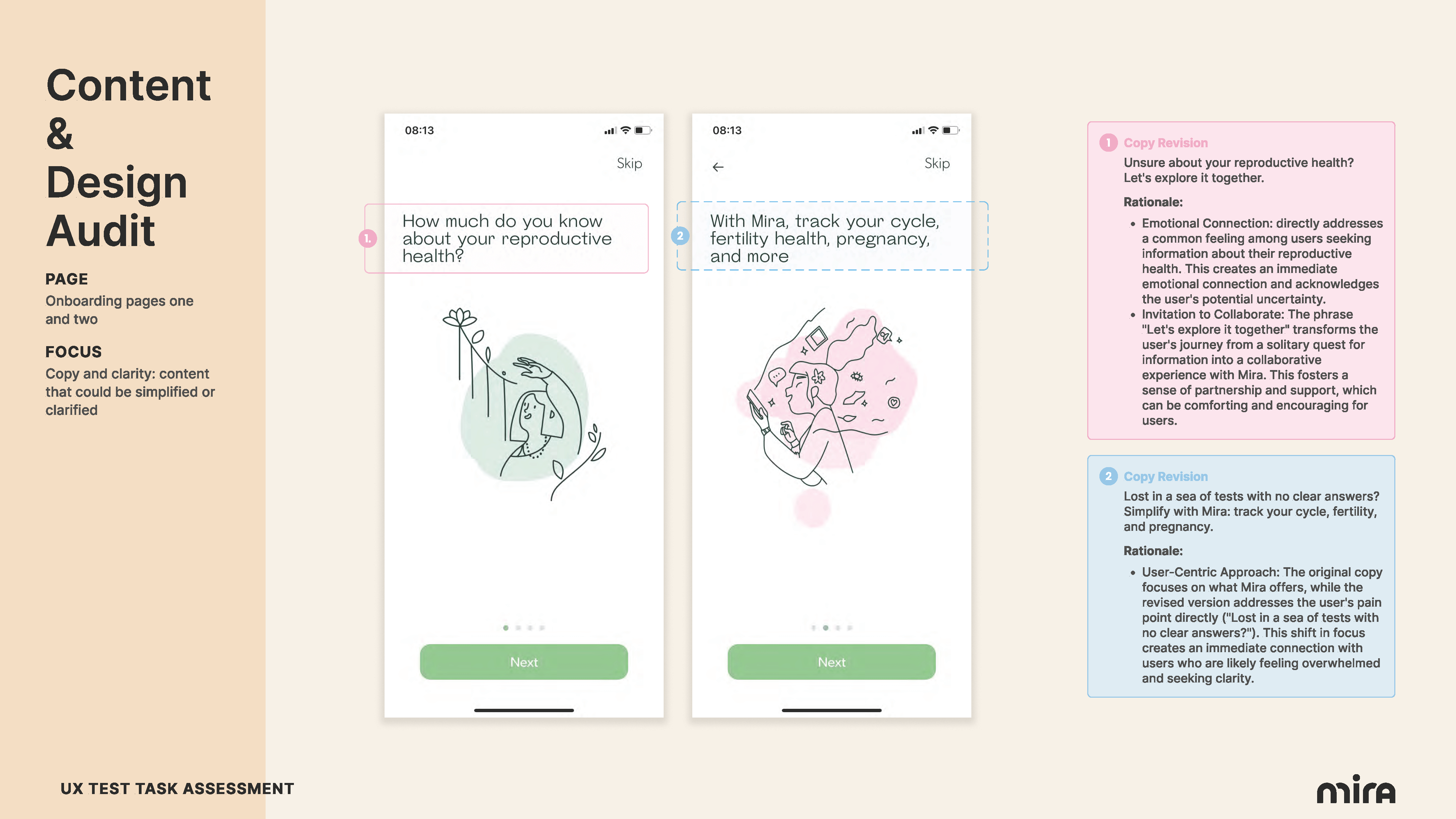
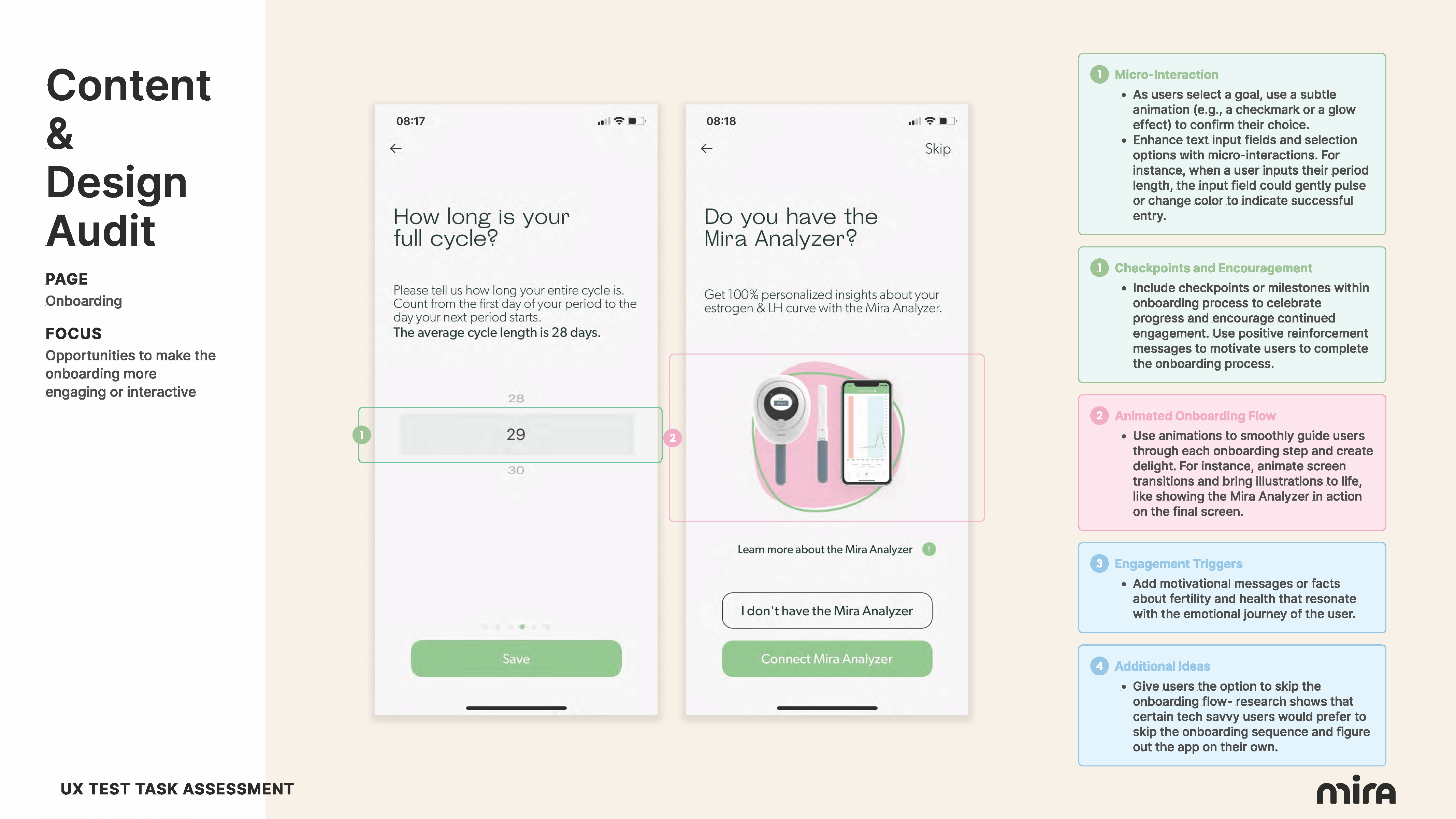
3. Content & Interaction Design
Based on these findings, I redesigned key parts of the onboarding experience by:
- Rewriting UX copy to improve clarity, tone, and user alignment
- Introducing contextual guidance to support complex inputs
- Identifying opportunities for progressive disclosure
- Recommending micro-interactions to reinforce user actions
The focus was on helping users feel confident, supported, and informed at every step.
4. System Thinking
Rather than treating improvements as isolated fixes, I structured recommendations as a scalable system:
- Prioritised changes based on user impact and implementation effort
- Defined phased improvements to support iteration over time
- Considered how onboarding connects to long-term product engagement

Key Insights
Insights were derived from a combination of user feedback synthesis and heuristic evaluation of the onboarding flow.
1. Users need clarity before they can engage
Many users struggle with fertility-related terminology and data inputs. When instructions are unclear, hesitation increases and momentum drops.
2. Emotional context shapes user behaviour
Fertility tracking is often tied to uncertainty and high emotional stakes. Users are not just completing tasks, they are seeking reassurance and understanding.
3. Lack of guidance creates avoidable friction
Users are asked to input complex or unfamiliar information without sufficient explanation or context.
4. Users think in journeys, not steps
While the onboarding flow is structured step-by-step, users experience it as a continuous journey.
Breaks in clarity or momentum at any stage increase the risk of drop-off.
5. Early experience sets long-term perception
The onboarding flow establishes how users perceive the product’s intelligence, reliability, and ease of use.
System-Level Improvements
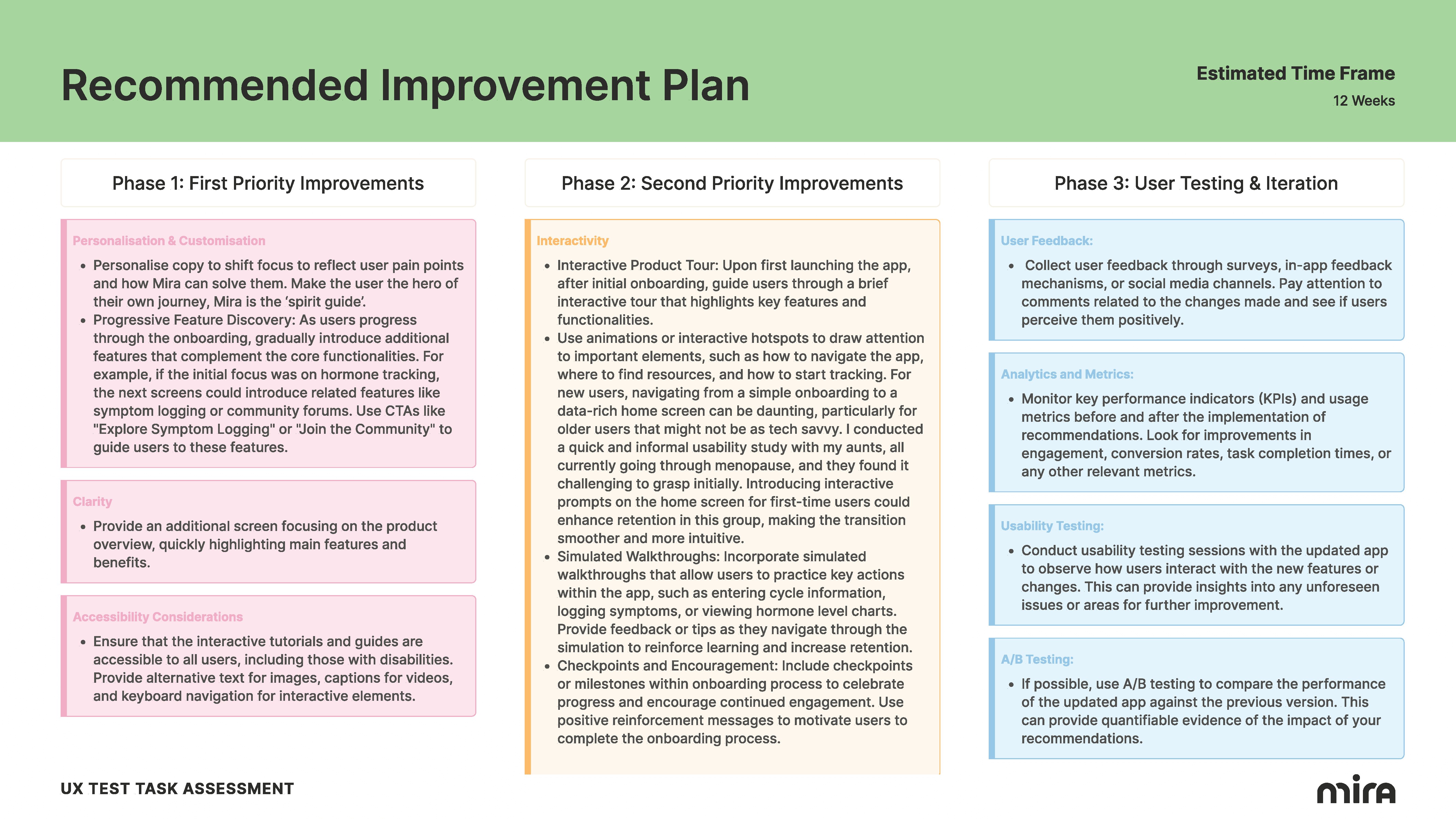
Rather than isolated fixes, improvements were structured into a scalable roadmap:
Phase 1 — Foundation
- Improve clarity and accessibility of copy
- Introduce better guidance for key inputs
- Strengthen onboarding structure
Phase 2 — Experience Enhancement
- Add interactivity and micro-interactions
- Introduce guided product walkthroughs
- Improve engagement through feedback loops
Phase 3 — Optimisation
- User testing and iteration
- Performance tracking (completion rates, drop-off points)
- A/B testing for onboarding variations

Outcome
This work demonstrates the ability to:
- Analyse and improve existing product experiences
- Translate user needs into clear, actionable design decisions
- Combine UX writing, interaction thinking, and product strategy
- Approach onboarding as a system that drives engagement and retention
The project contributed to successfully securing the role.
Reflection
This project reinforced the importance of clarity, guidance, and emotional awareness in onboarding design.
Strong UX writing and thoughtful interaction design are not surface-level improvements. They are fundamental to how users experience and trust a product from their very first interaction.